Low Chill Varieties
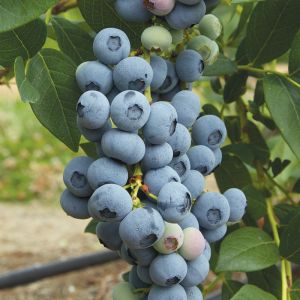
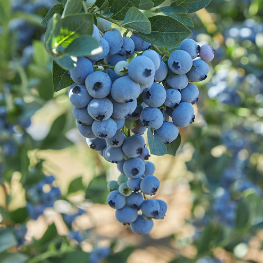
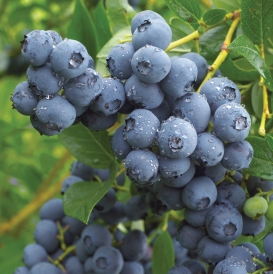
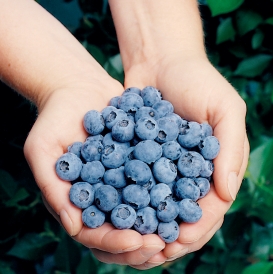
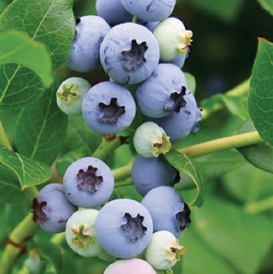
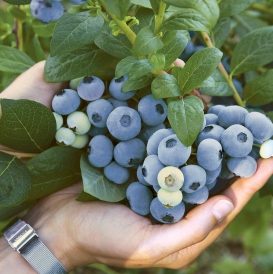
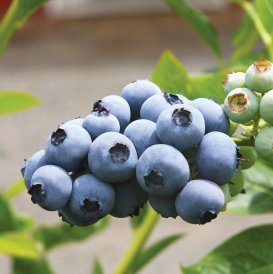
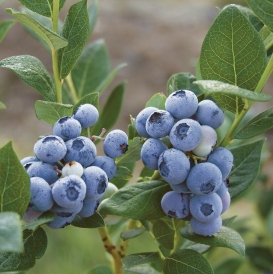
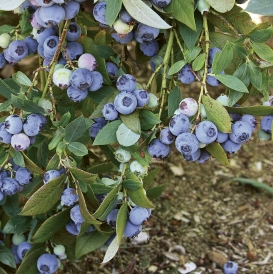
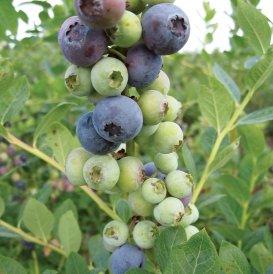
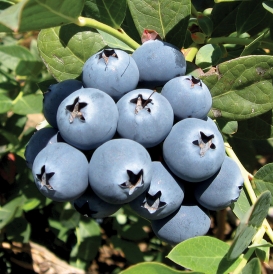
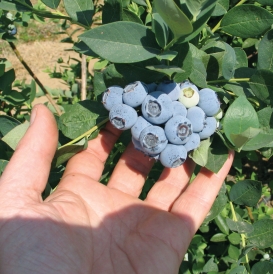
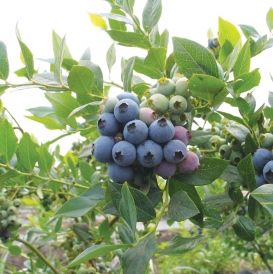
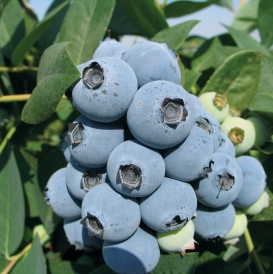
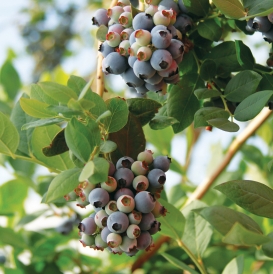
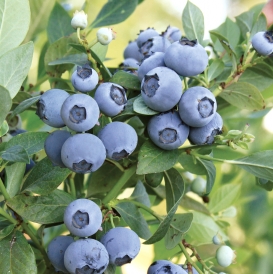
Southern Highbush varieties are considered best suited for climates where summers are generally hotter and chilling hours fall well below 1,000 per year.
The estimated minimum chilling requirement (number of hours under 45°F in winter) is listed for each variety. Our subjective evaluations are compiled with the most recent information from growers throughout the world. Most Southern Highbush varieties are not self-fertile. For highest production and largest berry size, alternate blocks of varieties to achieve cross-pollinization.
Varieties are listed in order of ripening based on average ripening for the Central Valley of California. Ripening time will vary depending on the climate in which they are grown.
![]()
Denotes varieties licensed to Fall Creek Farm & Nursery, Inc. Please refer to our Variety Charts for license details.
| Berries | Bush | Primary Use | |||||
| Variety | Season | Size | Qualities | Habit | Chilling | ||
|
Southern Highbush
Snowchaser ![]() U.S. Plant Patent 19,503
|
![]() |
![]() |
Firm, Good Flavor, Medium Firm | Medium Vigor, Rounded | ![]() |
|
| Snowchaser is the earliest ripening Southern Highbush. For California, this means harvest in April and early May. Snowchaser grows vigorously, has good berry quality, flavor, and high yields of medium sized fruit. With its low chill requirement Snowchaser has a tendency to fall-flower, and also bloom early in the spring. Springhigh and Emerald may be the best pollination companions. Although not recommended for the Southeast due to stem blight susceptibility, we continue to recommend Snowchaser for commercial plantings in California that target the earliest fresh market window. Licensor: Florida Foundation Seed Producers, Inc. Exclusive Territory(s): US - Western States (WA, OR, CA, AZ), Republic of South Africa, Argentina, Uruguay Non-Exclusive Territory(s): US - All Other States | ||||||
|
Southern Highbush
Primadonna ![]() U.S. Plant Patent 20,181
|
![]() |
![]() |
Excellent Flavor, Firm, Medium Blue |
Medium Vigor, Rounded |
![]() |
|
Primadonna ripens early and features high quality, good flavored, large fruit. We recommend Primadonna for trial where growers can use ever- greening management systems. Primadonna has shown difficulty with spring leafing if the bush defoliates in the winter. Plant with Snowchaser, Springhigh or Emerald for pollination. |
||||||
|
Southern Highbush
Springhigh ![]() U.S. Plant Patent 16,404
|
![]() |
![]() |
Dark Blue, Medium Firm, Pleasant Flavor |
Highly Vigorous, Upright |
![]() |
|
Springhigh adds to the “super-early” collection, reaching 50% ripe about seven days before Star. The large, flavorful, berries tend to be dark in color and should be harvested when just ripe to retain firmness. Although Springhigh is quite self fruitful, planting with other early to mid season varieties is still suggested. We continue to recommend Springhigh for new plantings where the earliest fresh markets are targeted. |
||||||
|
Southern Highbush
Rebel ![]() U.S. Plant Patent 18,138
|
![]() |
![]() |
Firm, Light Blue, Mild Flavor |
Spreading, Vigorous |
![]() |
|
Rebel has gained interest in Georgia due to its strong growth, reliable early harvest 6-8 days before Star, and firm uniform fruit. Production in young plantings has been very good, surpassing Star. It is important to stay ahead on harvest, as the flavor of Rebel can become quite bland if allowed to hang on the bush too long. We recommend Rebel for trial in California and for commercial plantings in the Southeast. |
||||||
|
Southern Highbush
Farthing ![]() U.S. Plant Patent 19,341
|
![]() |
![]() |
Firm, Mild Tart Flavor |
Round & Compact, Uniform Growth |
![]() |
|
NEW! Farthing is an early ripening, newly-released variety that has gained interest for its high yields, strong and compact growth habit, disease resistance and machine harvest potential. The berries of Farthing are dark in color and can become small in size with a large percentage of red backs if plants are allowed to over crop. We recommend Farthing for commercial trials in the Southern region. |
||||||
|
Southern Highbush
Scintilla ![]() U.S. Plant Patent 19,233
|
![]() |
![]() |
Firm & Sweet, Outstanding Flavor & Aroma |
Upright, Vigorous |
![]() |
|
NEW! Recently introduced, Scintilla has gained interest for its large, sky blue, high quality and exceptional flavored berries. Scintilla has moderate yields of fruit borne on loose, easily picked clusters and ripens just before Star. We recommended Scintilla for commercial trials in all low to medium chill sites wherever Southern Highbush can be grown. |
||||||
|
Southern Highbush
Star ![]() U.S. Plant Patent 10,675
|
![]() |
![]() |
Medium Blue, Outstanding Quality, Sweet |
Moderately Vigorous, Upright |
![]() |
|
Star continues to be one of the leading Southern Highbush varieties. It is a strong growing plant and has dependable berry quality. Star features good concentration of ripening and is easy to harvest by hand with most of the berries coming off in two pickings. Drawbacks with Star are the susceptibility to botrytis during wet springs and fruit cracking with heavy rains during ripening. We recommended Star for commercial plantings, in medium chill sites wherever Southern Highbush can be grown. |
||||||
|
Southern Highbush
Oneal
|
![]() |
![]() |
Dark Blue, Very Sweet |
Medium Vigor, Round & Spreading |
![]() |
|
Oneal has been planted extensively in California, Chile and Argentina, and is still a leading variety in its home state of North Carolina. Recently, its popularity has waned as newer varieties have been introduced. Good cultural practices are needed for optimum performance. |
||||||
|
Southern Highbush
Jewel ![]() U.S. Plant Patent 11,807
|
![]() |
![]() |
Light Blue, Slightly Tart Flavor |
Highly Vigorous, Upright |
![]() |
|
Jewel has become one of the leading Southern Highbush varieties throughout California and in Central Florida due to its adaptability, exceptional growth, record yields and large fruit. First harvest is usually a few days after Star and lasts three to four weeks. Plant Jewel with other midseason varieties for best pollination. By limiting fertilization and harvesting more frequently, growers have been able to reduce soft fruit issues. Jewel is recommended for commercial production in areas of low to medium chill. |
||||||
|
Southern Highbush
Emerald ![]() U.S. Plant Patent 12,165
|
![]() |
![]() |
Firm, Medium Blue, Mild Flavor |
Spreading, Vigorous |
![]() |
|
Emerald has also become one of the leading Southern Highbush varieties throughout California and in much of the Southeast. Highly productive, mild in flavor, Emerald maintains good fruit size through a long harvest period and requires multiple pickings. It blooms early and can be vulnerable in frost prone sites. We highly recommend Emerald for commercial plantings in all low to medium chill areas where it is suited. |
||||||
|
Southern Highbush
Abundance ![]() U.S. Plant Patent 16,476
|
![]() |
![]() |
Crisp Firmness, Excellent Flavor, Medium Blue |
Highly Vigorous, Upright |
![]() |
|
Abundance is a midseason variety selected for its high production and strong, upright growth. Abundance shows promise for mechanical harvesting as it presents the crispy-textured berries in long, exposed clusters. |
||||||
|
Southern Highbush
San Joaquin ![]() U.S. Plant Patent 19,342
|
![]() |
![]() |
Firm, Guava Flavor, Light Blue |
Upright, Vigorous |
![]() |
|
San Joaquin is a mid-season, upright, vigorous growing bush with an open growth habit. Harvest begins 7-10 days after Star. The berries are large and firm, uniform in size and very light blue in color, with a pleasing flavor. San Joaquin is a strong candidate for mechanical harvest for growers looking to substantially reduce costs during peak production. We recommend San Joaquin for commercial planting in the Central Valley of California and for limited trial in other areas. |
||||||
|
Southern Highbush
Camelia ![]() U.S. Plant Patent 18,151
|
![]() |
![]() |
Excellent Aroma, Excellent Flavor, Sky Blye |
Moderate Vigor, Upright |
![]() |
|
Camellia is a midseason variety that was selected for its uniformly large, sky blue berries that have excellent flavor and aroma. Our early observations here in the West show Camellia to be a heavy producer of medium vigor. In the southeast region, Camellia blooms 8 days later but ripens only 3 days after Star. Camellia can be planted with Star and Legacy as possible pollination choices. We recommend Camellia for commercial planting where a superior flavored variety is desired. |
||||||
|
Southern Highbush
Misty
|
![]() |
![]() |
Firm, Mild Sweet Flavor |
Upright, Vigorous |
![]() |
|
Misty has been planted extensively in California in the past decade, but has been largely been replaced by newer varieties. Misty is still planted as a pollinator in low or no-chill regions or where other varieties are not licensed. It must be pruned heavily to avoid over-cropping. |
||||||
|
Southern Highbush
Biloxi
|
![]() |
![]() |
Excellent Flavor, Light Blue, Very Firm |
Spreading, Vigorous |
![]() |
|
Biloxi is notable for its bushy growth habit and high quality berries with excellent flavor. Yields have been disappointing in areas with chilling above 150 hours. Biloxi is recommended for low or no-chill regions where the bush can be grown fully evergreen. |
||||||
|
Southern Highbush
Sharpblue
|
![]() |
![]() |
Excellent Flavor, Medium Blue |
Spreading, Vigorous |
![]() |
|
Sharpblue has been largely replaced by newer varieties but is still planted as a pollinator in low or no-chill regions or where other varieties are not licensed. The harvest season is quite long and the berries can be small and difficult to pick. The bush is one of the most adaptable of all the low chill types. Care must be taken to harvest frequently to keep the quality high in hot weather as the berry can get soft. |
||||||