Fall Creek Farm & Nursery™ design

CHECK LIST

____ Blueberry Plants
(2 per family member)
____ Peat Moss
(4-5 plants per
4 cu. ft. bale)
____ Mulch
(1 cu. ft. per plant)
____ Fertilizer
____ Soil Acidifier
Design
Design Design

Fall Creek Farm & Nursery, Inc. is a wholesale nursery selling only to the nursery trade and commercial fruit growers only. 

For the home gardener and blueberry enthusiast, please visit your local garden center or for mail order, visit www.mailordergardening.com

STARTING RIGHT WITH BLUEBERRIES

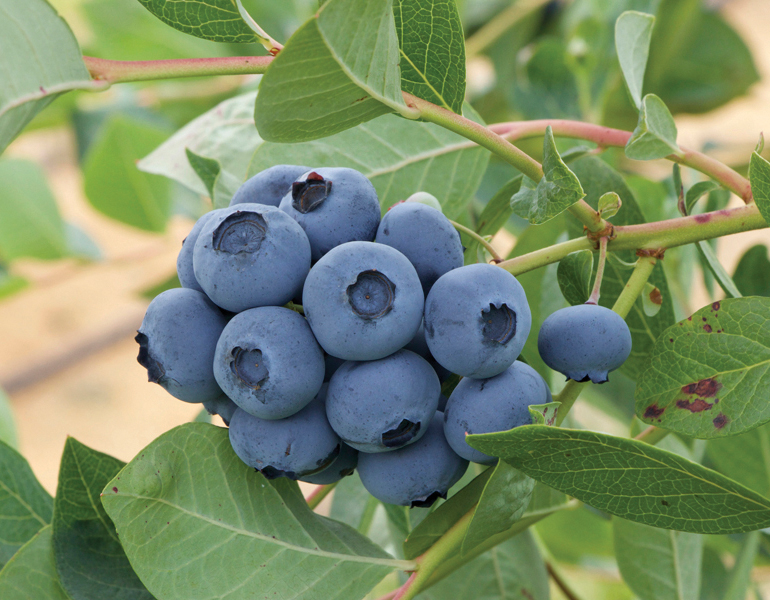
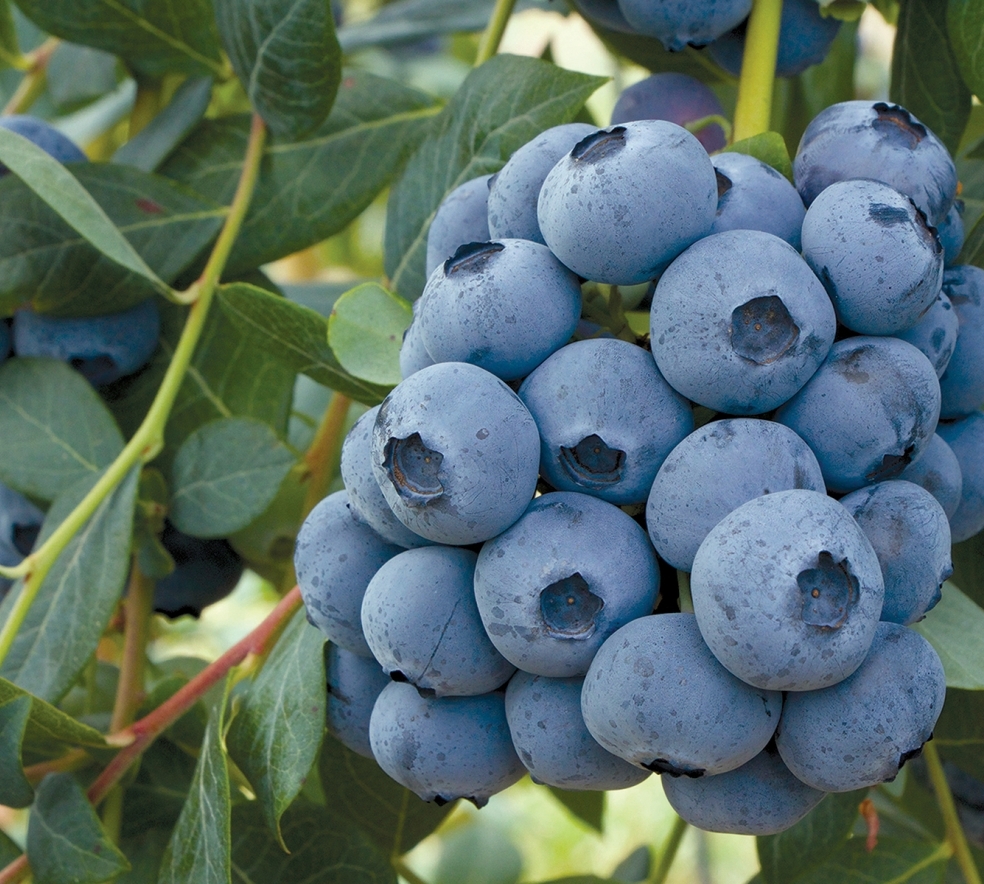
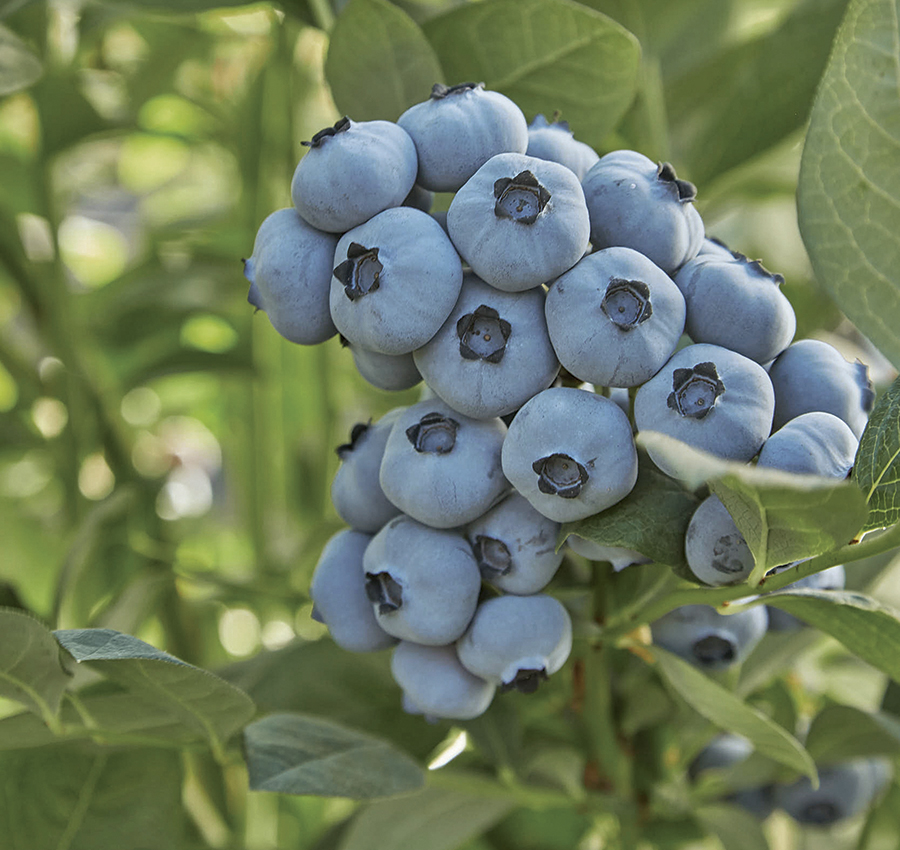
Blueberries bring a unique combination of delicious fruit and striking ornamental beauty to the garden and landscape. Blueberries are easy to grow, require little care, and are seldom bothered by pests. If a few basic steps are followed your blueberry plants can thrive and last a lifetime.

Varieties

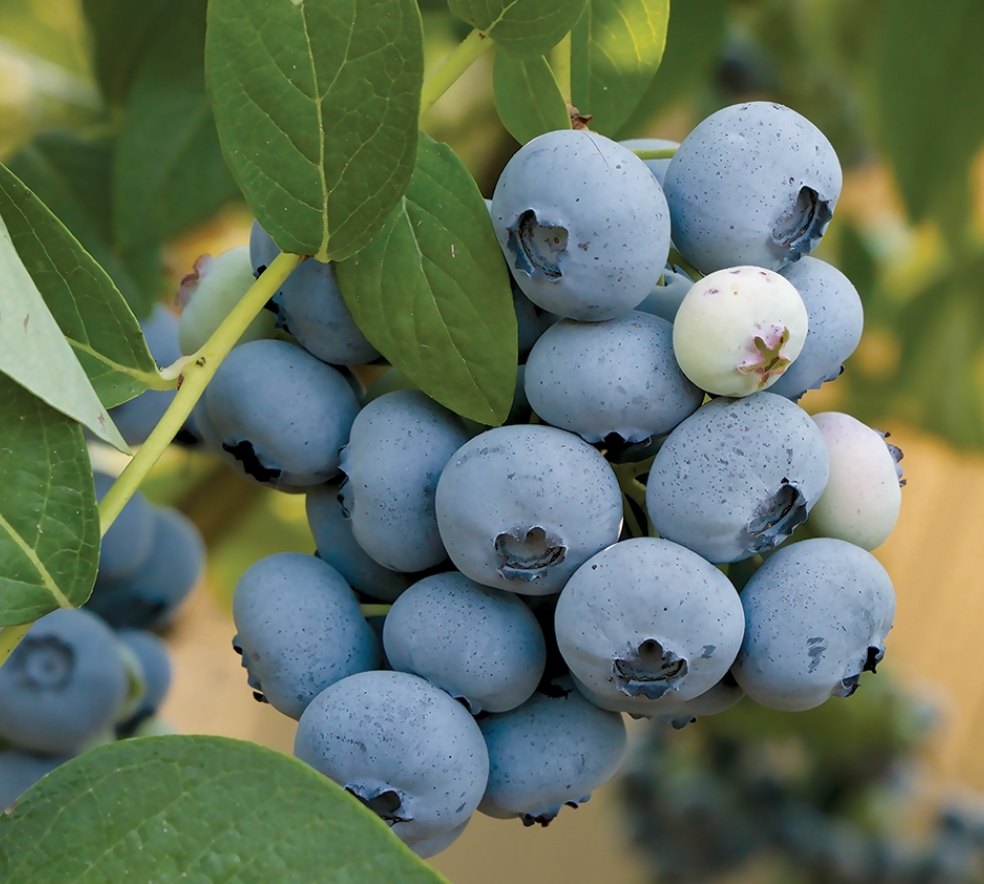
Blueberry varieties are distinguished by their climate suitability and ripening season. Be sure to choose varieties suited to your area. You may want to select varieties that ripen at different times or feature large fruit (best for fresh eating and desserts) or small fruit (best for muffins and pancakes). Bushes with brilliant fall color or different growth habits offer the gardener lots of choices to use throughout the landscape. For blueberry lovers, allow at least two plants per family member.

Site Selection and Preparation

Select a sunny location in well drained soil free of weeds and well worked. Locate in an area where irrigation water is available as best results will be obtained by keeping the root zone moist throughout the growing season. Where the soil is poor or marginally drained, raised beds 3-4 feet wide and 8-12 inches high work very well for blueberries.

A fail safe way to grow blueberries in almost any soil is to incorporate peat moss into the planting medium. For planting directly in the ground, work up a planting area approximately 2½ feet in diameter and 1 foot deep. Remove 1/3 to ½ of the soil. Add an equal amount of premoistened peatmoss and mix well. One 4 cubic foot compressed bale will usually be sufficient for 4-5 plants. For raised beds mix equal volumes peatmoss with acid compost or planting mix. Blueberries thrive in acidic soils. Your garden center representative can recommend a soil acidifier if necessary for your area.

Spacing

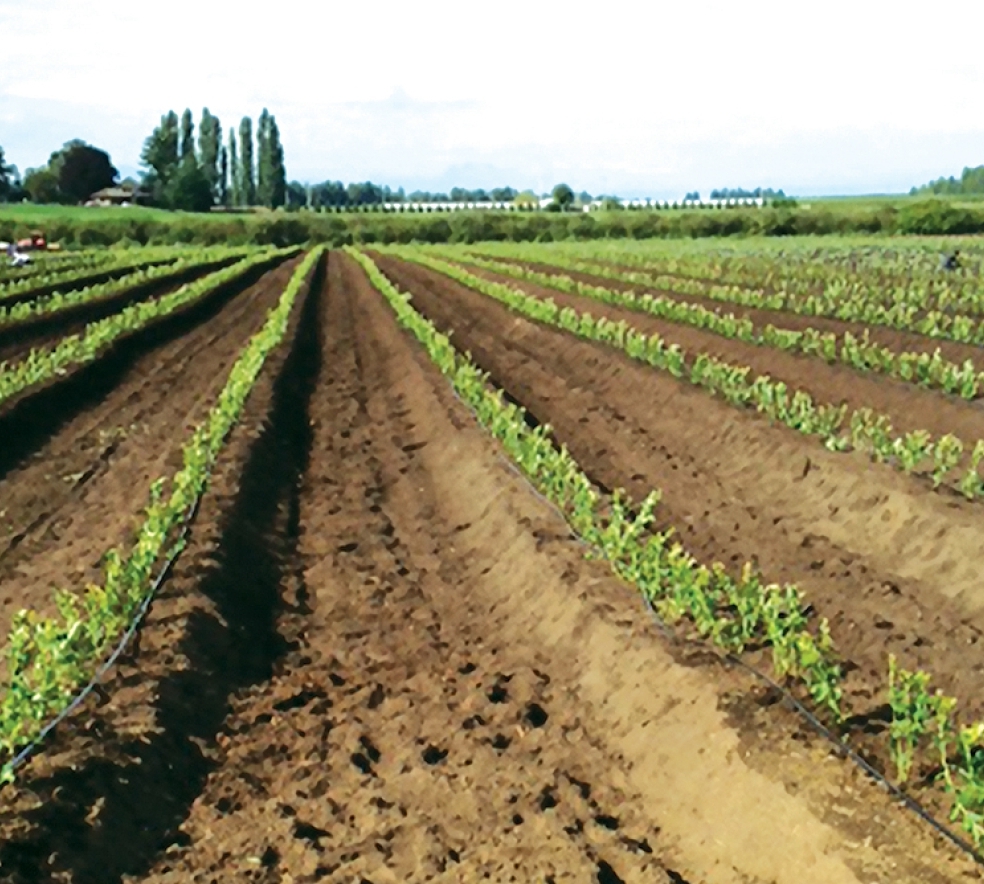
Blueberries can be planted as close as 2½ feet apart to form solid hedgerows or spaced up to 6 feet apart and grown as individual specimens. If planted in rows, allow 8 to 10 feet between the rows depending on equipment used for mowing or cultivating.

Planting

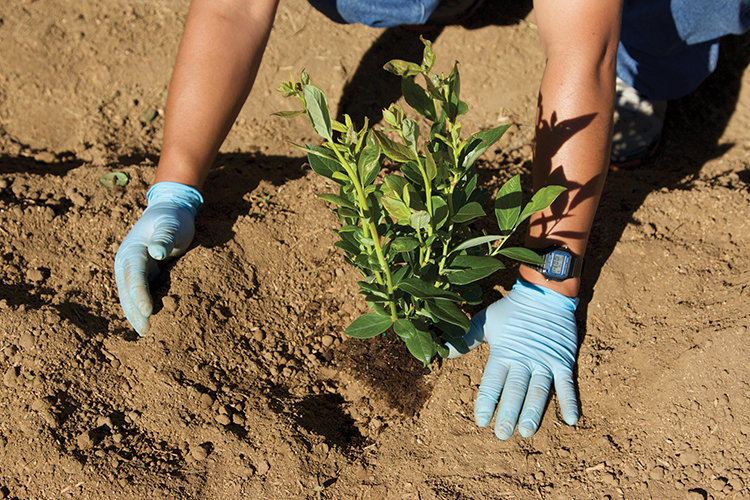
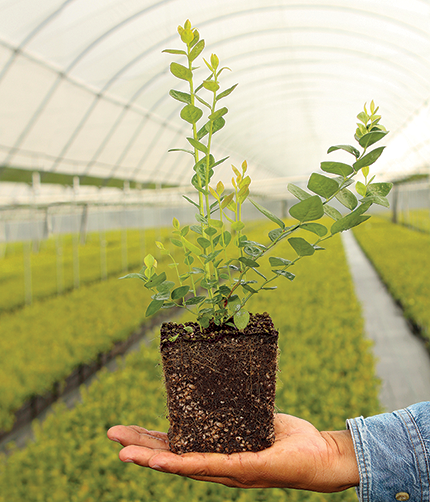
For container stock, remove from pot and lightly roughen up the outside surface of the rootball. Set the top soil line of the plant about 1/2 inch higher than the existing ground and firm around rootball. Mound soil up along sides of exposed root mass. Water in well.

For bareroot plants, spread roots out side and shallow, cover with ½ inch of soil. Firm soil around roots and water well.

Landscaping your home gardenerMulching

Blueberries do best with 2-4 inches mulch over the roots to conserve moisture, prevent weeds and add organic matter. Bark mulch, acid compost, sawdust, grass clippings, etc. all work well. Repeat every other year.

Pruning

It is important that blueberries get established before allowing them to bear fruit. Thereafter, they should be heavily pruned each year to avoid overfruiting which results in small fruit or poor growth.

Remove all blooms as they appear the first year. In years thereafter, follow these steps after the leaves have dropped.
  1. Remove low growth around the base. If it doesn't grow up, it gets pruned out!
  2. Remove the dead wood, and non-vigorous twiggy wood. Select for bright colored wood with long (at least 3 inch) laterals. Remove blotchy colored short growth.
  3. If 1/3 to ½ of the wood has not been removed by the above steps, thin out the fruiting laterals and small branches until this balance has been obtained.

Fertilizing

Blueberries like acid fertilizers such as Rhody or Azalea formulations. For newly planted stock, use 2 tablespoons of 10-20-10 (or similar fertilizer) in late spring or once plants are established. (Careful! Blueberries are very sensitive to over fertilization!) For subsequent years, use 1 ounce of fertilizer for each year from planting to a total of 8 ounces per plant. Apply in early spring and again in late spring for best results. Always water well after fertilizing.

For organic fertilizers, blood meal and cottonseed meal work well. Avoid using manures.

Home | Commercial | Nursery | Gardener | About | International | Links | Contact | Site Map
design design